

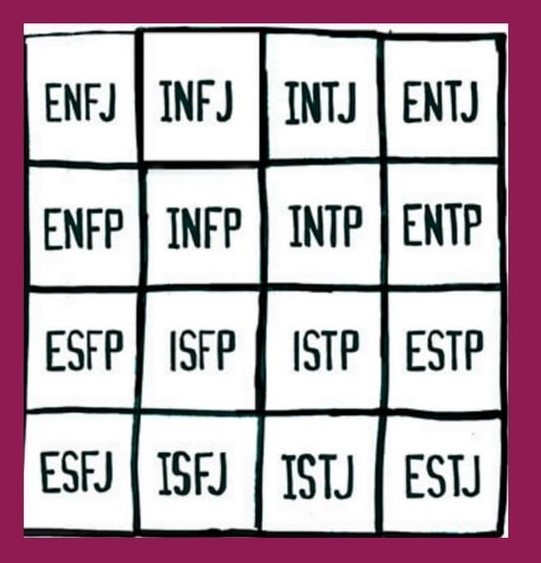
The Myers-Briggs type indicator, or MBTI, is a widely used personality test in modern times. Across 115 nations, it is utilized by over 88% of Fortune 500 companies and is accessible in 29 languages.
The MBTI exam is used to assess a person’s aptitude and personality, providing useful information about their workforce to employers. It is extensively employed in domains such as education, organizational training, skills development, and leadership and development initiatives.
What is an indicator of the Myers-Briggs type?
A self-reported personality test known as the Myers-Briggs type indicator, or MBTI, assigns individuals to one of 16 personality types. By measuring personality qualities using four dichotomies (scales)—introversion-extraversion (I-E), intuitive-sensing (N-S), thinking-feeling (T-F), and judging-perceiving (J-P)—the test assists organizations in identifying the unique characteristics of their workforce. Each scale functions as a spectrum, and although a person’s personality may not precisely fit into one type, their four-letter code can reveal which side of each scale they most closely align with.
Recognizing the MBTI test’s four dichotomies—
I against E: Introversion versus Extroversion
This explains how an individual gets their energy and concentrates. An introvert, on the other hand, finds energy in solitude and introspection, whereas extraverts get their energy from social interactions and external stimuli.
Sensing against intuition (N vs. S)
This has to do with one’s method of information gathering. Here, the intuitive will follow their gut feelings and focus on potential meanings and implications. A sensor, on the other hand, will use their senses to hunt for information and details.
Reason versus emotion (T versus F)
This contradiction relates to how individuals assess information and make decisions. Feelers are more prone to give personal values, empathy, and emotions precedence than thinkers, who will emphasize logic and objectivity in thinking.
Assessing versus sensing (J against P)
This concerns how individuals approach the external world. Judges prioritize structure, order, and closure; perceivers place greater value on spontaneity, flexibility, and adaptation.
What steps went into creating the Myers-Briggs type indicator?
Katherine Briggs and her daughter Isabel Myers created the MBTI exam. Katherine Briggs was fascinated with psychology and drew inspiration from Carl Jung’s book “Psychological Types.” Upon realizing the complexity and practical use of Jung’s theory of personal difference, Briggs and Myers set out to simplify and comprehensive his writings for a wider readership. Their project was greatly impacted by World War II, as veterans began to reenter the workforce after the conflict. In order for the mother-daughter team to function well in both the workplace and society at large, they sought to develop a means of improving mutual understanding between returning veterans and members of the workforce.
Published in 1962, the original MBTI exam was patented in 1943.
How is the Myers-Briggs personality assessment administered?
Carl Jung’s psychology theory serves as the foundation for the MBTI personality test. He asserts that introversion and extraversion are the two primary personality types that each person possesses, and that both kinds can coexist inside the same person. The dominant personality type, however, varies from person to person and can reveal information about their perception, demeanor, etc.
To further refine the classification of an individual with introverted or extraverted inclinations, additional attributes such as thinking, feeling, sensing, and intuition can be considered. Building upon this theory, Briggs and Myers made the theory more approachable by adding judgment as a new component to the list.
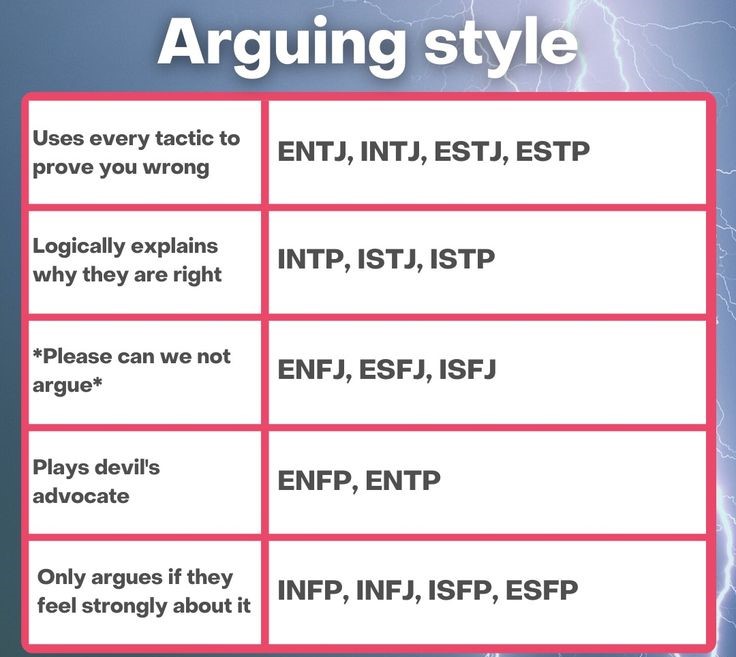
The 16 types of the MBTI personality test were developed based on these four dichotomies; the names of each type are made up of four abbreviations that stand for the classification criteria.
Utilizing the Myers-Briggs personality assessment—
1. Evaluation of personality
The MBTI personality test is mostly used as a tool for assessment. By taking this exam, people can have a better knowledge of their personality type, which can help explain some behaviors or motivations. Many firms also utilize the test as a tool to learn more about the relationships, personality traits, and habits of their personnel.
2. Initiatives for development
Knowing the MBTI personality types of current staff members and even potential new hires can serve as the impetus needed to launch development initiatives throughout the company. The MBTI test can assist in identifying problem areas, skills that want improvement, and skills that require attention.
3. Counseling and coaching for careers
In order to assist people in identifying their qualities and aptitude, which may result in a suitable career path, career counselors also employ the MBTI exam. It is a good idea to match a person’s personality type with certain work environments and job positions to make sure they are moving in the right direction and toward a rewarding career that plays to their strengths and shortcomings. In addition to identifying possible obstacles, the MBTI personality test can assist in developing coping mechanisms.
4. Group cohesion
Effective teamwork is essential for productive collaboration. When used in conjunction with team-building exercises, the MBTI test can be helpful in assigning tasks to team members in a way that best utilizes their unique abilities. The test can also assist team members in better understanding the personality types and communication styles of one another. Recognizing the variety of personality types on a team helps reduce friction while promoting unity.
How does the Myers-Briggs personality test work?
There is no time restriction for the MBTI exam. Depending on which test version is being utilized, the total number of questions in the assessment may change. For instance, there are 93 questions in the North American edition and just 88 in the European version.
There are two statements in each of the forced-choice questions on the test. The test-taker will have to select the statement that most accurately describes them or their ideas. Each of the questions’ statements fits into one or more of the Myers-Briggs type indicator’s dichotomies. The assertions represent both ends of the spectrum, even though they might not be exact opposites.
MBTI test question examples
Every MBTI test question consists of two statements listing various values, preferences, etc. Test-takers ought to select the one that most closely matches their situation. You can skip questions when there isn’t a viable answer, but doing so will also reduce the amount of information that can be used for the personality assessment. The questions that make up the MBTI personality test are not from the official Myers-Briggs type indicator, but they are the ones that are used in the examples below.
a. direct, honest, and forthright; alternatively, b. diplomatic, compassionate, and upbeat
b. reasonable, inquiring, and reasoning; or b. compassionate, sensing, and accommodating
c. take a literal interpretation, or b. search for possibilities and meaning.
How trustworthy is the MBTI exam?
Test-retest reliability and maintaining consistency in the results over time are the two elements that determine a psychometric assessment’s dependability. Internal consistency within the assessment’s questions is also taken into account. The MBTI personality test excels in both areas and meets or exceeds reliability and consistency standards. Furthermore, the Myers & Briggs Foundation, the company that creates the MBTI test, has published four test manual editions in 1962, 1985, 1998, and 2018. These editions offer a wealth of data and evidence based on research regarding the validity and reliability of the MBTI personality test.
As with all aptitude and personality tests, the MBTI test should be used in conjunction with other recruitment or development strategies because personalities are dynamic and comprise components that are impossible to quantify exactly. As with all aptitude and personality tests, the MBTI test should be used in conjunction with other recruitment or development strategies because personalities are dynamic and comprise components that are impossible to quantify exactly.
To sum up
Unlike other psychometric assessments, the Myers-Briggs type indicator should not be utilized as the only qualifying factor for hiring. That being said, the exam can be a highly useful supplement to workplace training and development programs since it provides insights into an individual’s strengths, limitations, and psychological preferences.
Psychometric testing by Mercer | Mettl assists hiring managers in identifying candidates who are the greatest fit for open positions. This provides an in-depth evaluation of an applicant’s motives, inclinations, positive and negative personality traits, cognitive abilities, etc. Through this instrument, companies can obtain valuable information about candidates’ performance in the actual world.