

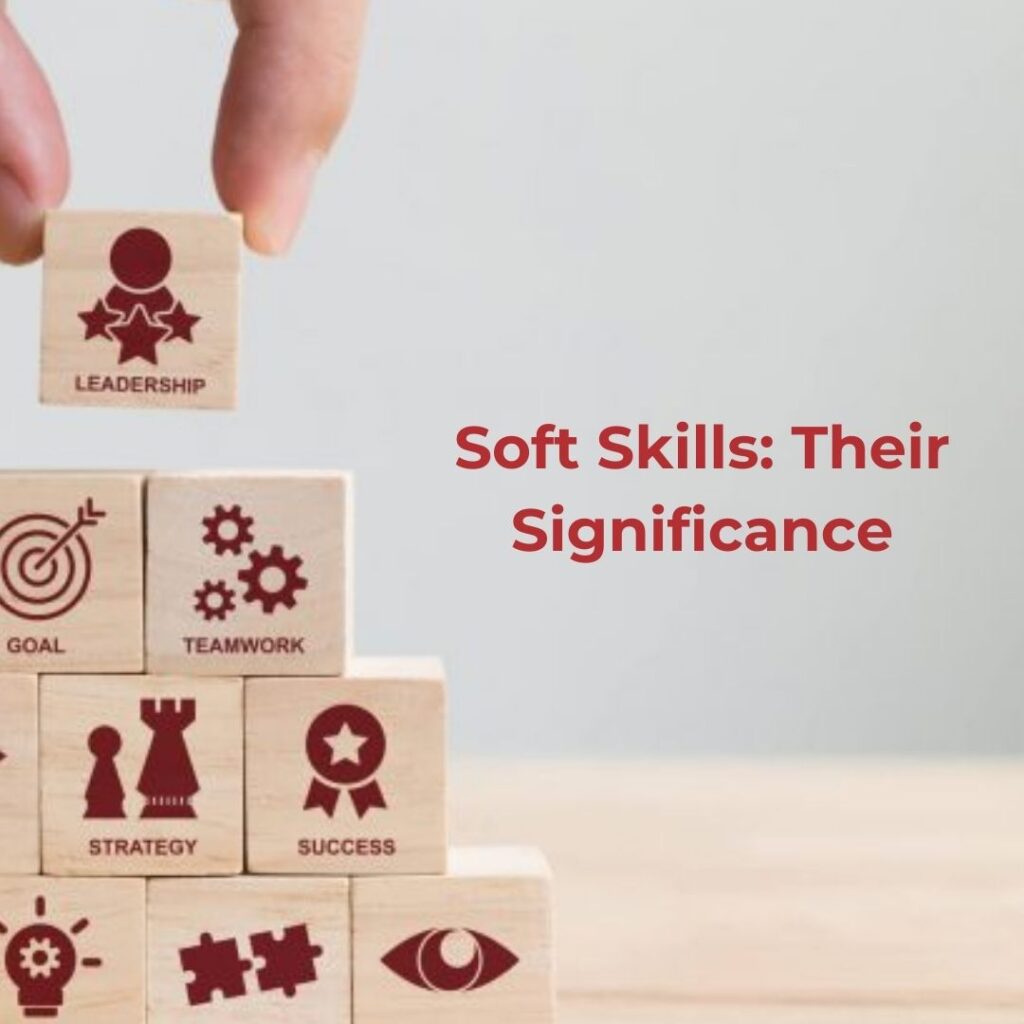
Both personality qualities and social skills that affect an individual’s ability to collaborate or engage with others are referred to as soft skills. Collaboration, time management, empathy, and delegation are just a few of the many abilities that fall under the umbrella phrase “soft skills.”
According to the Future of Jobs report by the World Economic Forum, by 2025, the most crucial skills needed in the workplace will be intricate problem-solving, critical thinking, creativity, people management, and emotional intelligence.

A lot less training is available for these soft skills than for technical abilities like coding, and their significance is sometimes underestimated. Businesses appear to assume that employees understand appropriate workplace behavior as well as the value of soft skills like initiative, good communication, and listening, which is frequently untrue.
Soft skills: what are they?
Soft skills are character traits that affect an individual’s ability to work or communicate with others. It is simpler to build relationships with others, establish reliability and trust, and manage teams when one has these abilities.
They are fundamentally necessary for your success at work, the success of your business, and your personal life.
What makes soft skills crucial?
Most social interactions include some degree of soft skills. You might be networking for a new job, pitching your concept to coworkers, negotiating for a new contract, and so on in a corporation. Developing these soft talents will help you earn more business and advance your career more quickly. We employ soft skills in our work every day.
Conversely, a deficiency in soft skills may restrict your opportunities or possibly spell the end for your company. Strong leadership, delegation, teamwork, and communication skills can help you manage projects more efficiently, produce results that satisfy everyone, and even have a positive impact on your personal life by enhancing your interpersonal interactions.
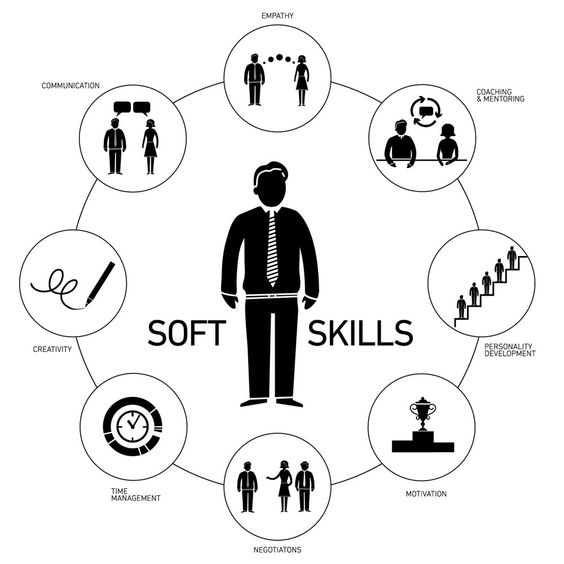
Communicating effectively and forming friendship groups are two ways that people meet possible partners outside of the workplace using soft skills. It is possible that you are settling on a renovation cost for your new home or that you spend the weekends working with the kids of your neighbors. Our personal and professional lives can benefit from having soft talents.
Allow us to examine a few particular instances that bolster the significance of interpersonal abilities.
1. Promotion and advancement in one’s career
According to a 2017 study by iCIMS Hiring Insights, 94% of recruiting experts think that a worker with more years of experience but less soft skills will have a harder time getting promoted to a leadership role.
Because they will make you stand out from the competition at interviews and on the job, developing these abilities is now essential if you want to advance in your profession.
2. Interpersonal interactions are common in today’s workplace
In today’s workplace, abilities like teamwork, expressing ideas, interacting with coworkers, and active listening are highly prized. In an increasingly competitive world, having strong soft skills is essential for creating a productive, collaborative, and healthy work environment—all qualities that organizations need to thrive.

3. Soft talents are in demand from clients and customers
Nowadays, a plethora of options are available to consumers for where to make purchases, thanks to the internet and cellphones. Customer service frequently determines a consumer’s decision to utilize a specific firm because savings and convenience are easy to find for these customers.
For an organization to succeed, it is therefore essential that its clients can be reached on a personal basis.
4. Hard skills will be essential in the workplace of the future
Soft skills will be more important in the workforce due to automation and artificial intelligence. Due to the decrease in hard skill-requiring jobs brought about by technological advancements, soft skills have become increasingly important in the workplace as differentiators. According to a Deloitte Access Economics report, “by 2030, two-thirds of all jobs will be in soft skill-intensive occupations.”
Jobs like assembly line workers will become automated as robots grow less expensive and artificial intelligence performs better. It will be more crucial than ever to possess traditional abilities like critical thinking, communication, and teamwork.
5. It is difficult to automate soft skills
Building on the last point, soft talents like emotional intelligence are difficult to automate and are not likely to do so in the near future. This suggests that in the near future, they should gain in value.
Soft skills, however, can be challenging to teach and monitor progress in.
6. Recruiters are in high demand for soft skills
There is a great need for soft skills in the profession. A Harvard student’s 2017 thesis on the value of social skills in the workplace states that the proportion of American workers in occupations requiring a lot of social interaction increased by about 12 percent.
Soft talents most in demand (according to LinkedIn research):
- Organization for Communication
- Collaboration
- Critical reasoning
- Social abilities
- Originality
- Communication between people
- Flexibility
The article concludes that social skills are still crucial because computers are not very good at imitating human interaction. Thus, people should continue to strive to develop their soft skills and social abilities through endeavors like team leadership, volunteering, or even working on open-source projects with other people.

Do your soft skills need to be improved?
Many people excel in some soft skills but struggle with others. For instance, a person may be an excellent public speaker and be able to control a large crowd while on stage, but they may find it difficult to engage with others at a crowded networking event.
It’s typical to either overestimate your own ability or underestimate the significance of soft skills. Stronger soft skills could enhance the following situations:
- When compared to other professionals in your field, your client retention rate is low.
- You struggle to meet deadlines or are usually late for meetings.
- You don’t expand your professional network, or you stay away from networking events completely.
- You are able to schedule appointments with potential customers; however, you rarely proceed to the next stage or close deals.
Soft skills’ significance to enterprises
All sectors of the economy require soft skills; for instance, effective communication is necessary for jobs as a mechanic, hair stylist, nurse, or any other occupation. Enhancing communication skills can help your staff connect more successfully, and time management skills can boost productivity, among other benefits associated with developing each soft skill.

Employees who work on improving their soft skills can also generally benefit from:
Enhanced productivity: As workers become more proficient in their jobs, the organization will get closer to realizing its objectives.
Improved teamwork: In order for a firm to run well, its employees must get along well with one another and collaborate toward a similar objective. When people collaborate and employ their unique talents and skills, the quality of the work increases.
Higher retention rates: Individuals prefer to work for organizations that support their professional growth; in fact, 63% of UK workers say they would switch employers if given the chance to work for one that offers greater training possibilities. Also, when employee retention rises, the company’s recruitment expenses drop.
Increased job satisfaction: Putting money into your workers’ well-being lets them know you appreciate them. Job satisfaction is boosted by feeling valued and by having a positive view of the organization.
Better leadership: Because certain abilities, including active listening and empathy, are required for leadership roles, soft skills help people get ready for them. This is significant, as 50% of workers quit because of incompetent bosses.
Brings in new business: satisfied customers are more likely to refer you to other customers if they are pleased with the services you provide. This opens up new commercial prospects for your firm.

Improved workplace communication: When employees communicate more effectively, there is a lower chance of misinterpretation of the signals. As a result, the business can run more efficiently. For a complete soft skills solution for your self development, click here