

People- pleasing might sound like a positive trait which attributes towards a person being helpful, selfless and caring by nature but it is actually far from reality. People-pleasing is a behavior where someone constantly seeks to make others happy or gain their approval. This often happens at the expense of their own needs or desires. This can manifest in various ways, such as saying “yes” to requests even when it’s inconvenient, avoiding conflict, or suppressing personal opinions or feelings to avoid upsetting others.
Meanwhile people- pleasing can also mean that a person is diplomatic, pacifier by nature, being politically correct at times of need or simply being a bit more strategically manipulative than the rest.
However, if this trait is not checked at the correct time can lead to burnout, resentment, and a lack of self-identity. Over time, the person might feel drained or unappreciated, as they prioritize others’ happiness over their own well-being.
If you have recognised people-pleasing tendencies in yourself then you are already on the path to recovering your mental health. Setting personal boundaries and practicing self-assertiveness will be helpful in maintaining one’s mental balance.

People-pleasing traits often reflect a deep desire to avoid conflict and gain approval from others. Here are some common traits of people-pleasing behavior:
1. Constantly Saying “Yes”: At the cost of your inconvenience, you will try to agree to chores or requests just to avoid earning disapproval.
2.Avoiding Conflict: People pleasers are overcome by an urge to constantly avoid conflict which can mean they are suppressing their own needs, desires or even thought process.

3.Difficulty Saying “No”: Declining a request can be extremely difficult for people pleasers as they cannot deal with the negativity that might come from it.
4. Overcommitting: As people pleasers find it difficult to say no, they often find themselves overburdened with chores or commitments which can take a toll on their mental and physical health.
5. Neglecting Their Own Needs: Their own feelings, desires, needs, requirements, and aspirations often take a back seat for people pleasers as they keep on prioritizing others over themselves.
6. People-pleasing through Compliments: They often compliment their friends, associates or relatives without actually meaning it. Agreeing with others in general becomes a habit.
7. Low Self-Esteem: People-pleasers often derive their self-worth from how others perceive them, which leads to lack of confidence in making decisions independently or standing up for themselves.

8. Fear of Rejection or Disapproval: Living up to other people’s expectations becomes very important for people pleasers and their subsequent actions affect their surroundings.
9. Tendency to Hide Emotions: Hiding their true emotions and generally putting up a congenial and agreeable front becomes second nature to people pleasers.
10. Self-Sacrifice: Gaining approval of others is a primary thought process that leads people pleasers to strive to make others’ lives easier and their own increasingly difficult.
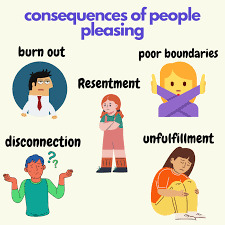
If any of these traits resonate, it’s sign of people-pleasing. Once this becomes a habit with you, you tend to lose interest in relationships of all sorts, resentment towards friends and associates can grow, a general dissatisfaction with life, and finally your stress burns you out.
Click here for more info on Helping Hands
How to break the habit of people pleasing –
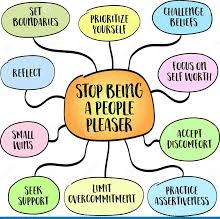
Overcoming people-pleasing attitude takes time and self-awareness. This attitude is a result of certain habits and some natural emotional traits. It is often a by-product of fear of rejection, a desire to be liked, or an ingrained habit of prioritizing others over oneself.
Here are some steps to help you break free from it:
1. Understanding the Root Cause
- Dig deep into your thoughts and try to find the answer to ‘Why’ do I do this?
- Which fear is foremost on my mind- fear of rejection, unworthiness or unincluded in social structures?
- This will help to tackle the problem at its core.
2. Practice Saying “No”
- Saying no to minor requests that inconvenience you is a start.
- Saying ‘No’ does not mean you are being rude. Using positive words will reflect your true feelings. E.g -‘ I would love to help you out but I have some previous plans which cannot be rearranged.’
- Saying “No” does not make you a bad person. Your positive attitude and openness will help you along.
3. Set Boundaries
- Identify your limits and communicate them clearly without being harsh. Your choice of words and body language will help to drive your point of view forward.
- If someone crosses your boundaries, address it respectfully but firmly. E.g. “I understand that this is important for you but this week has been hectic for me as well. I need time for myself to recuperate for the coming weeks.”
- Believe in your importance and convey the same accordingly.
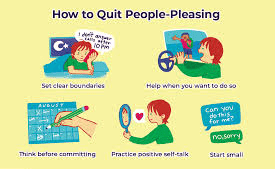
4. Prioritize Your Needs
- Do I want to do this?
- Decisions should be made based on your values, not just to make others happy.
- Schedule time for yourself—your needs matter too.
5. Get Comfortable with Discomfort
- Initially saying ‘No’ will be uncomfortable. But gradually it will give you more clarity.
- Discomfort is temporary.
- People who truly value you will respect your limits as well.
6. Stop Seeking External Validation
- Others’ approval or disapproval does not decide your worth in any way. Learn to be comfortable in your skin.
- “I am enough, even if I don’t please everyone.”
- It is important to surround yourself with people who know your worth and accept you for who you are. People’s judgment changes like the seasons, learn to recognize genuineness.
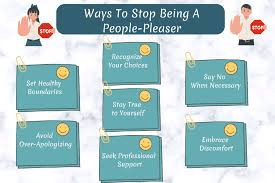
7. Manage Guilt
- Feelings of Guilt are initially normal. But do not let it rule your thoughts. Learn to accept your decisions wholeheartedly, others will be bound to follow suite.
- Taking care of myself is not selfish—it’s necessary.
8. Work on Self-Esteem
- Being self-assured will not only let you make the right decisions but will also help you to stick by them.
- Get out of the habit of pleasing everyone. It is not possible or worth the trouble.
- Engage in activities that boost your self-worth.
- Make a list of your things-to-do and stick by them so that your schedule is not broken.
9. Seek Support
- Seek help if required. Your seeking help shows that you are understanding and acknowledging your problems. This is the first step towards healing.
- Talk to trusted friends or family. They will provide you with the confidence and reassurance that you need.

10. Embrace Imperfection
- You can’t make everyone happy, and that’s okay. Pleasing everyone is an impossible task.
- Some people may not like the new, boundary-setting you—and that’s their issue, not yours.